
Reports and Insights
Informing Advocacy and Action
Nationally, Missouri is ranked:
The top five reasons Missouri children were referred to Intensive In-Home Services are:
-
parent/child conflict
-
parenting skills problems
-
communication
-
child neglect
-
mental health/emotional issues
The number of Missouri children in foster care has increased 49% from May 2009 to May 2022.
This puts Missouri at double the national average of children in foster care.
Only 6% of hotline calls in FY 2023 were substantiated.
Substantiated FY 2022 Reports
54.6%
a finding of neglect

‘Finding of neglect’ is a broadly defined and inconsistently applied term. The top conditions cited were:
- lack of supervision
- inadequate housing
National Stats
One out of two children who enter foster care will never reunite with their families.

Children who experience five or more placements while in foster care have a 90% contact rate with law enforcement. (1)
of Black children in America are the subject of a child abuse and negelct investigation by the age of 18.
Insights by Community
Kansas City (Jackson County)
48.3%
of children returned to their homes after being in care in Jackson County. (FY 2024, DSS)
22.1%
of children in care in Jackson County had five or more placements. (FY 2024, DSS)
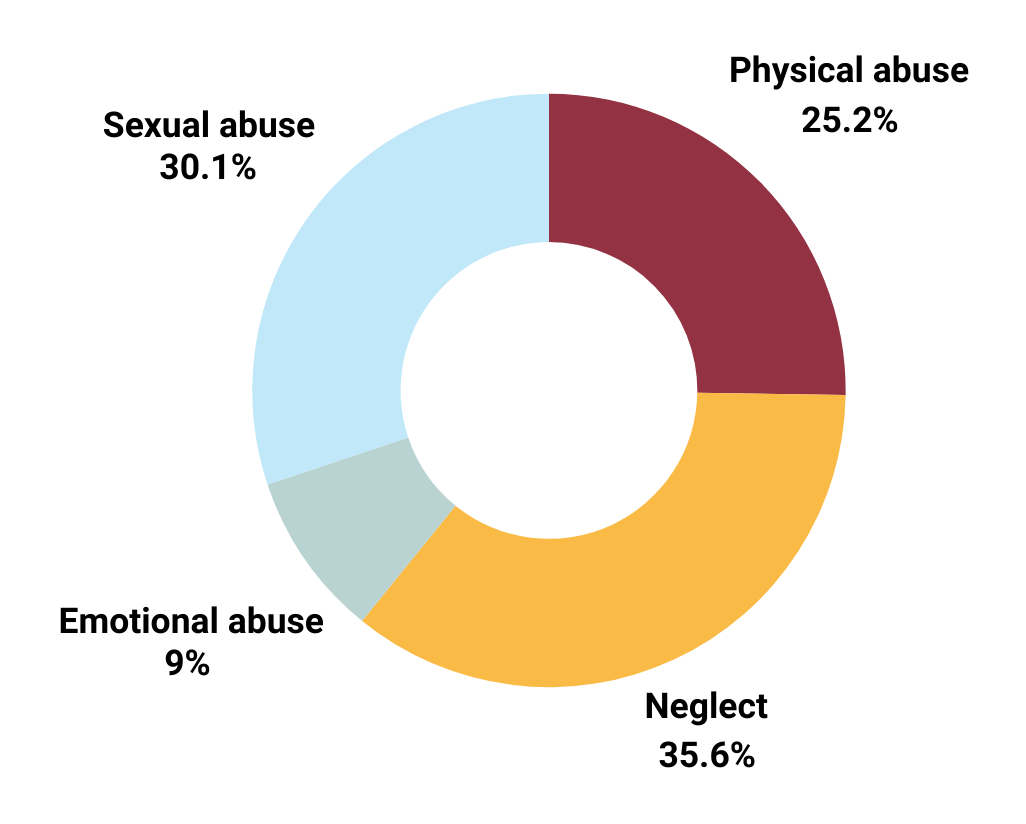
Reasons children entered care in Jackson County:
St. Louis (City and County)
44.8%
of children returned to their homes after being in care in St. Louis City and County. (FY 2024, DSS)
20.9%
of children in care in St. Louis City and County had five or more placements. (FY 2024, DSS)
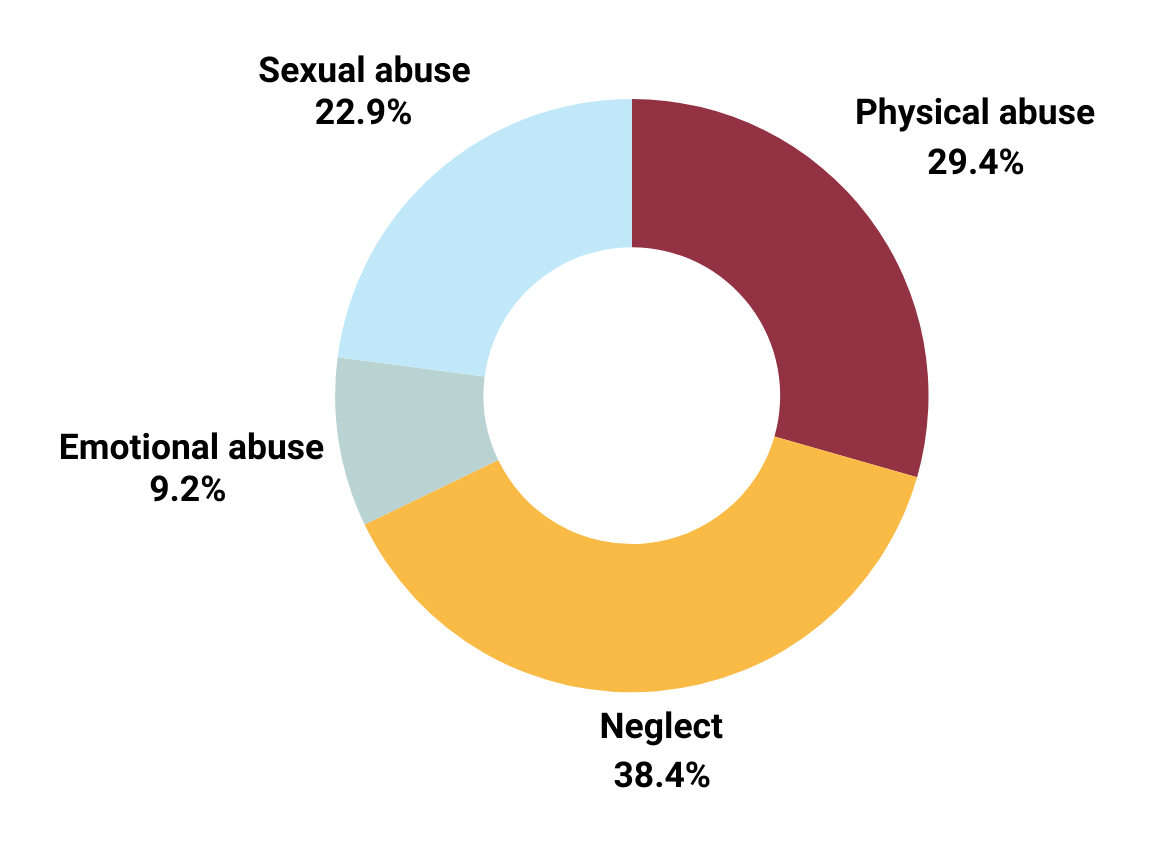
Reasons children entered care in St. Louis City and County:
Northeast (Adair County)
82.5%
of children returned to their homes after being in care in St. Louis City and County. (FY 2024, DSS)
21.4%
of children in care in St. Louis City and County had five or more placements. (FY 2024, DSS)
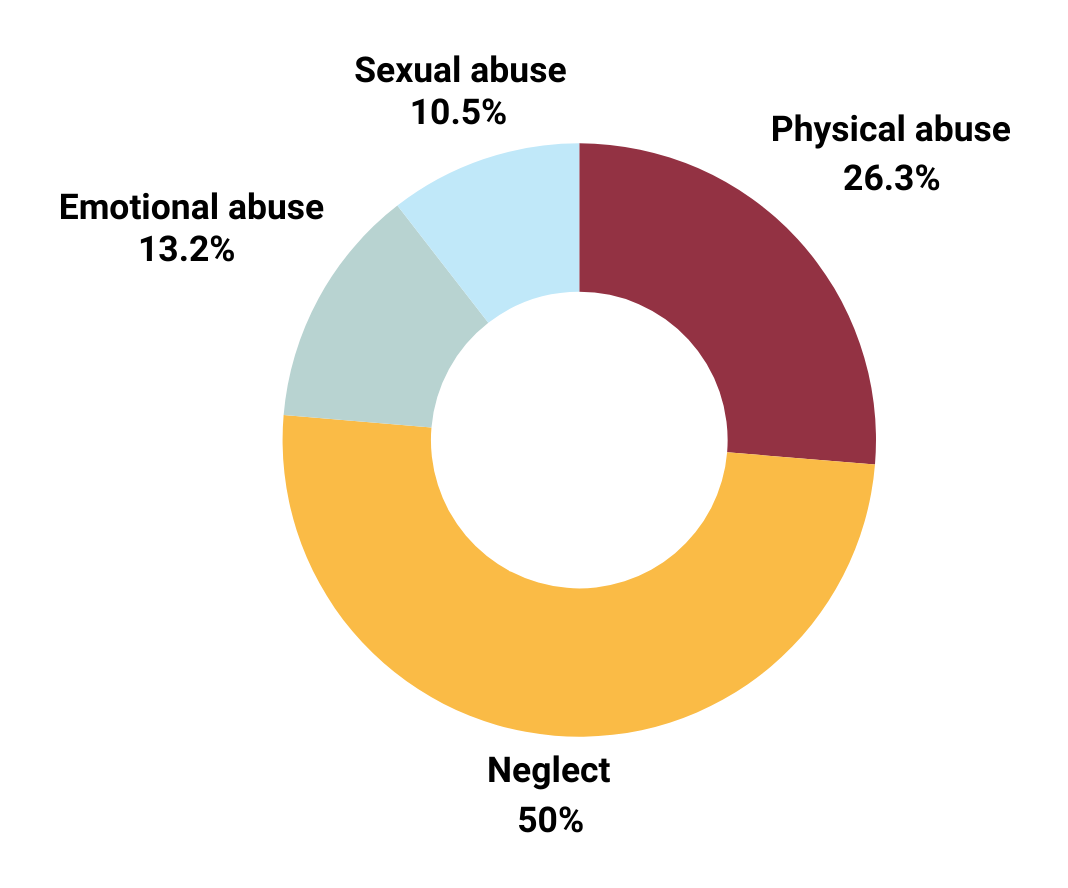
Reasons children entered care in Adair County:
Southwest (Greene, Jasper and Newton Counties)
47.9%
of children returned to their homes after being in care in Greene County. (FY 2024, DSS)
38.2%
of children returned to their homes after being in care in Jasper County. (FY 2024, DSS)
55.4%
of children returned to their homes after being in care in Newton County. (FY 2024, DSS)
19.9%
of children in care in Greene County had five or more placements. (FY 2024, DSS)
23.4%
of children in care in Jasper County had five or more placements. (FY 2024, DSS)
17.7%
of children in care in Newton County had five or more placements. (FY 2024, DSS)
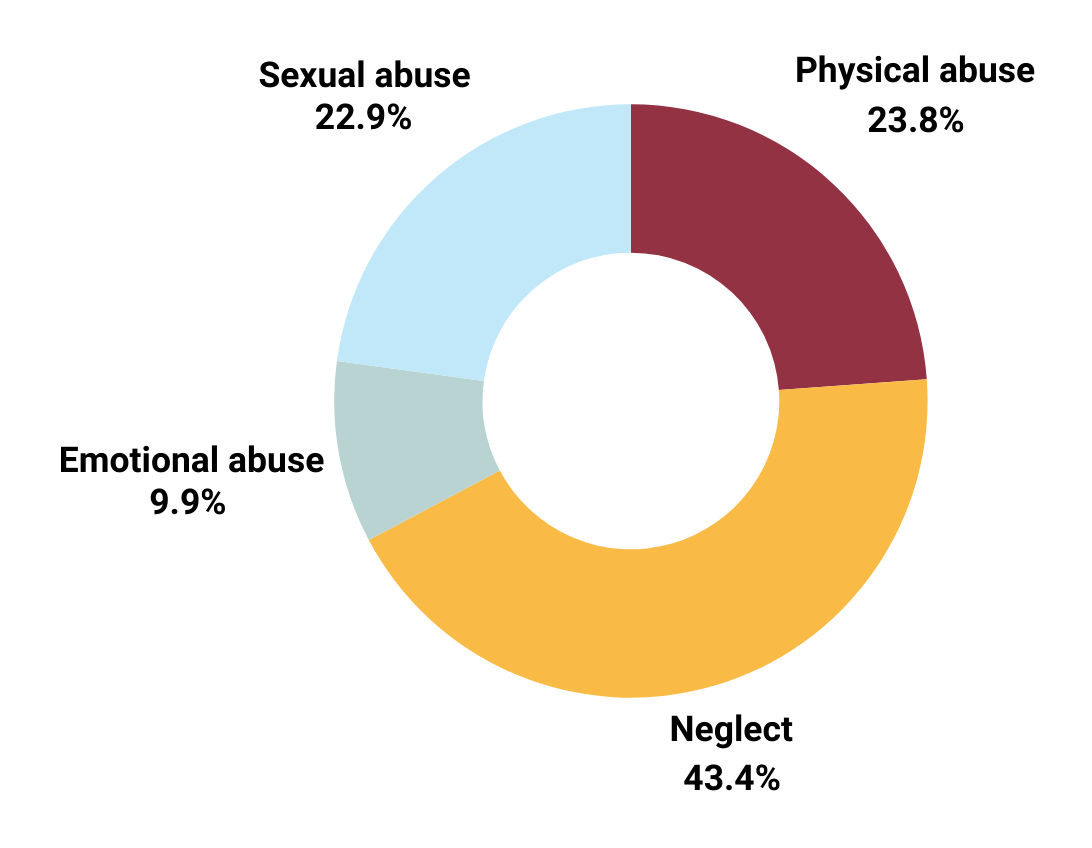
Reasons children entered care in Greene County:
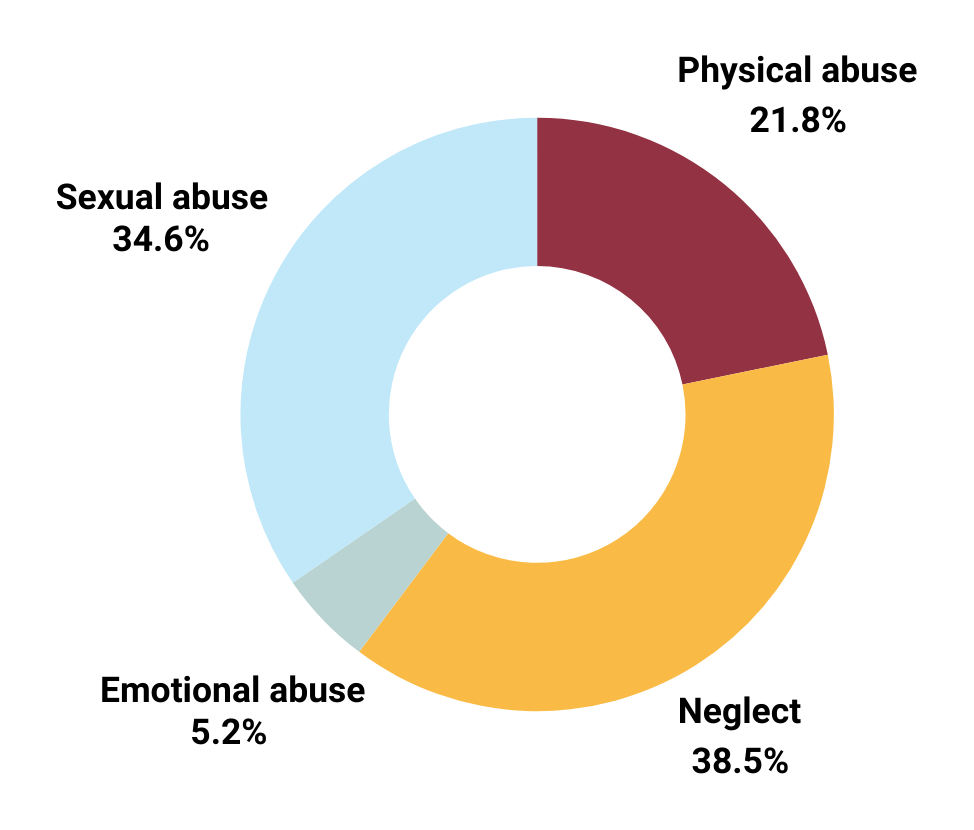
Reasons children entered care in Jasper County:
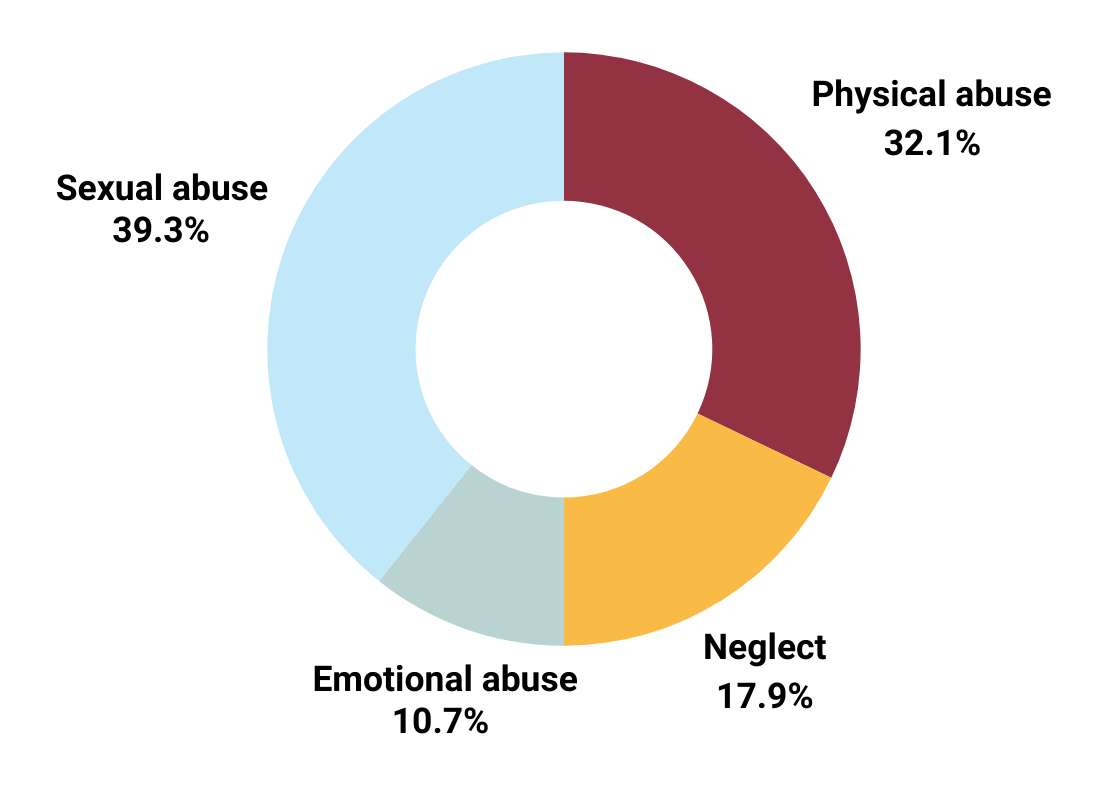
Reasons children entered care in Newton County:
Southeast (Scott and Stoddard Counties)
62%
of children returned to their homes after being in care in Scott County. (FY 2024, DSS)
74.4%
of children returned to their homes after being in care in Stoddard County. (FY 2024, DSS)
19.6%
of children in care in Scott County had five or more placements. (FY 2024, DSS)
14.5%
of children in care in Stoddard County had five or more placements. (FY 2024, DSS)
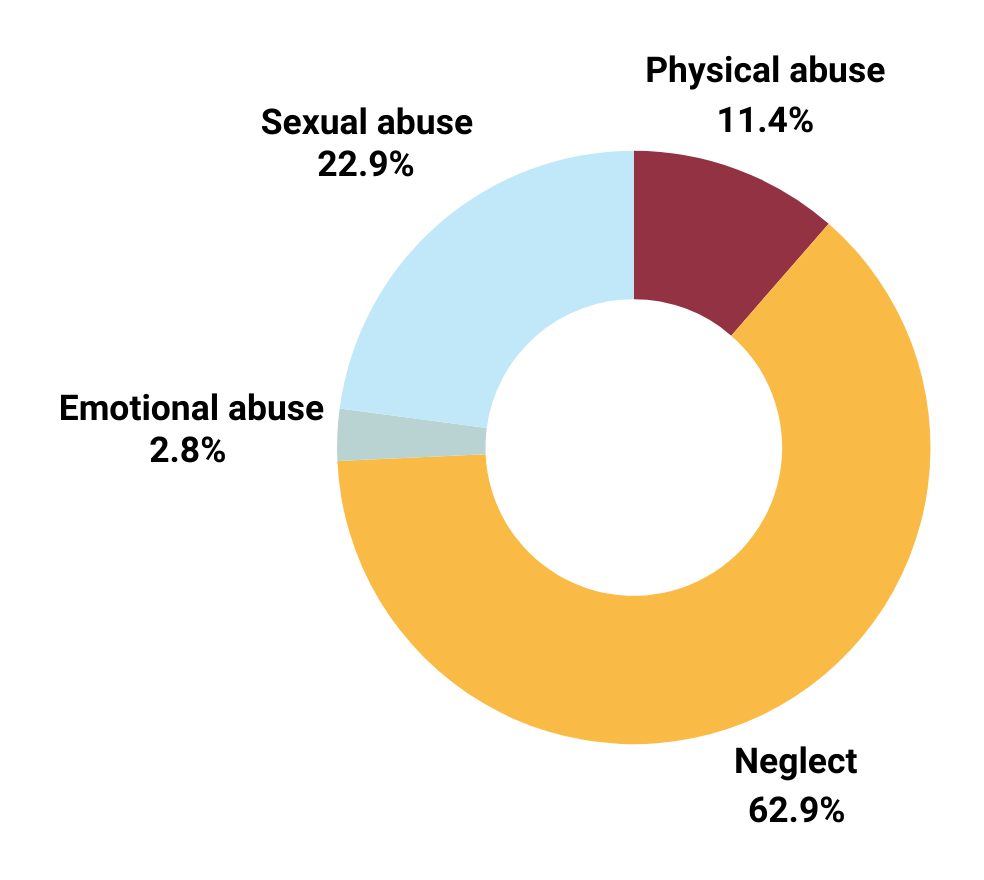
Reasons children entered care in Scott County:
Reasons children entered care in Stoddard County:
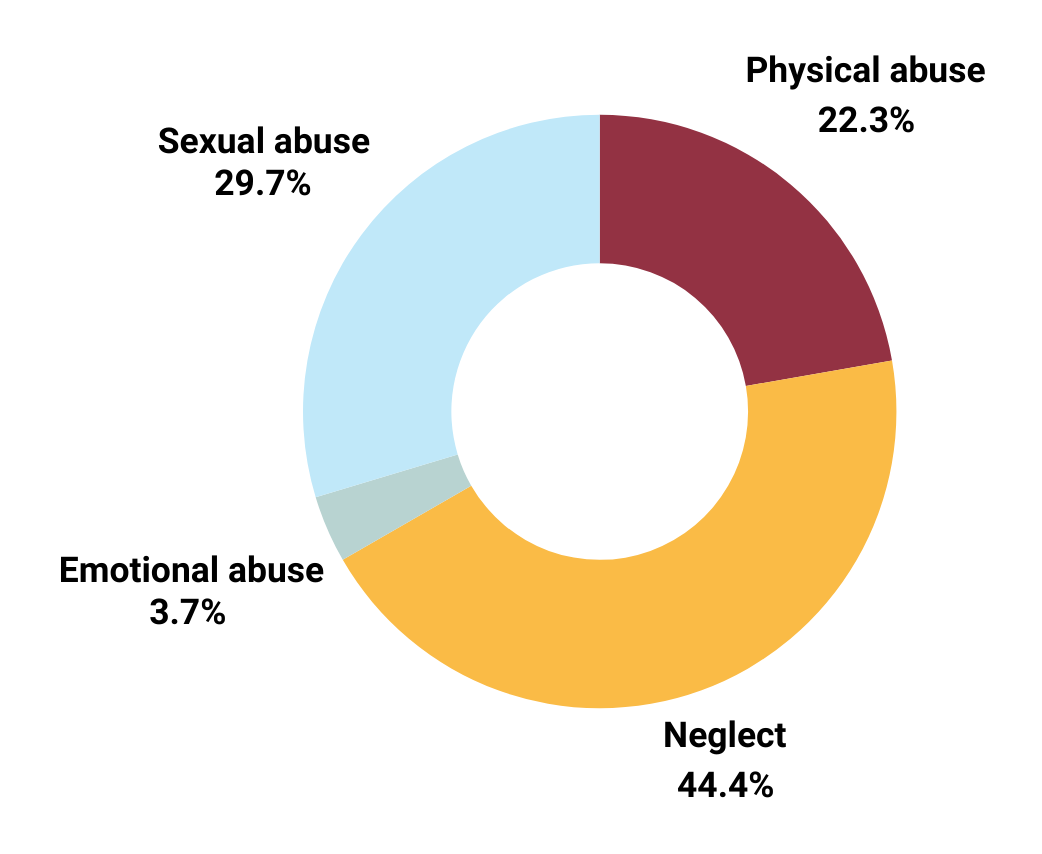

Why do Missouri children enter foster care?
In FY 2022, 4,151 children were involved in abuse/neglect incidents.
Neglect Categories
More Reasons for Entering Foster Care
Homelessness in Missouri
Parents do not choose homelessness or inadequate housing. Children often enter foster care for these conditions born of poverty, not neglect.
5,992 Missourians were homeless on any given night in 2022. 1,680 Missourians experienced homelessness as part of a family.
While the number of Missourians experiencing homelessness decreased 4% between 2007 and 2022, the number of unsheltered homeless increased 44% during that same period.
Source: National Alliance to End Homelessness
204,049, or 27%, of all renter households are extremely low-income (maximum income of $26,500 for a four-person household). There are 114,609 affordable rental homes available for extremely low-income renters, resulting in a shortage of suitable housing for this population bracket.
Source: National Low Income Housing Coalition. 2023 Missouri Housing Profile
Substance Use Disorders
Substance-use disorders can be traumatic for every family, but when the impacted family lives in poverty, the chance of a child being removed and placed in foster care increases.
The latest estimates from the National Survey on Drug Use and Health1 indicate 778,000 Missouri adolescents and adults experienced substance use disorders during the past year, including:
- 526,000 with disorders involving alcohol use
- 343,000 with illicit drug use
- 49,000 with prescription drug
Mental Health Issues
Missouri data from the National Survey on Drug Use and Health also indicates 996,000 adult residents experienced mental health issues during the past year, including:
- 292,000 with serious mental illness
- 483,000 who experienced major depressive episodes
- 256,000 who had serious thoughts of suicide
In addition, 79,000 adolescents had major depressive episodes.
Source: Missouri Department of Mental Health, Division of Behavioral Health, Status Report on Missouri’s Substance Use and Mental Health-28th Edition-2022
Community-Based Care Outcomes
MCC members provided case management services for

How We’re Reaching Permanency
99.8%
95%
Media and Links

Stay Connected and Informed
