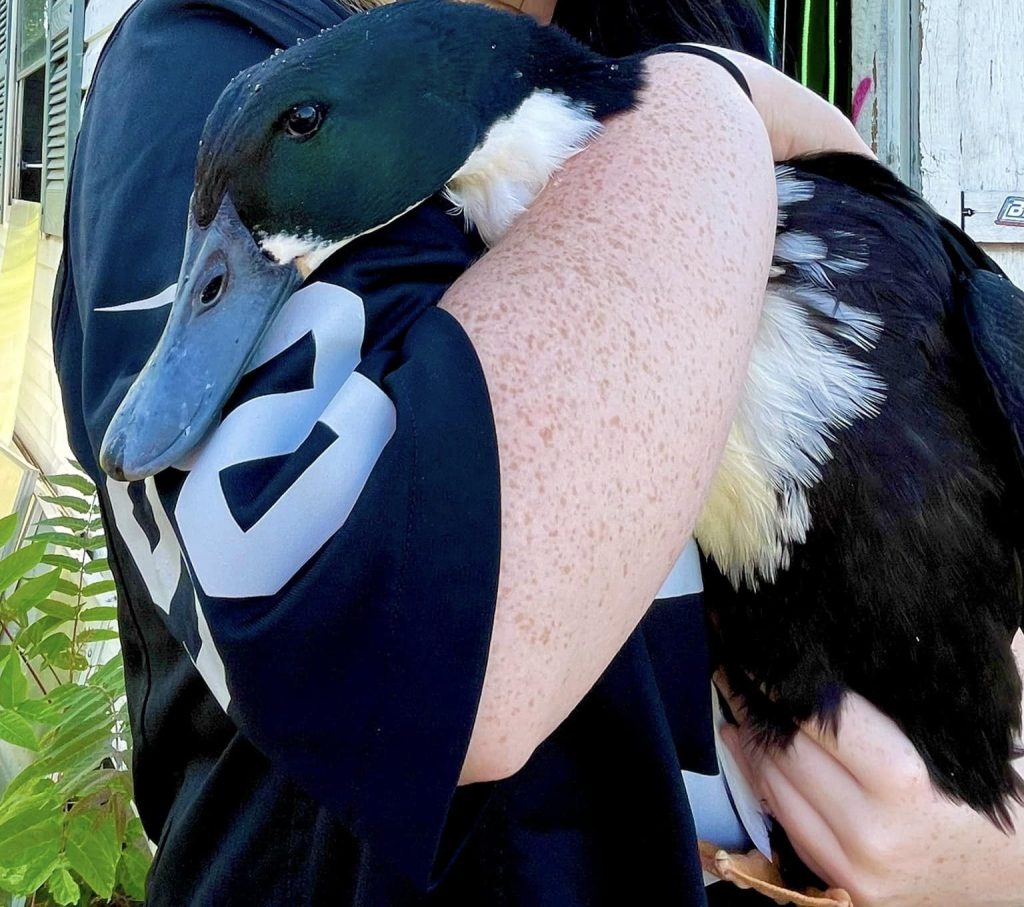
It’s a bright, sunny day. Carol Martin walks around a rolling green lawn and shows me her daughter’s ducks – she’s raising them as part of her 4-H program. We’re on Zoom, so she pans the camera over to her family’s home, which she and her husband Donnie now are buying. But the Martins’ life didn’t always look like this. “I am so proud of us,” Carol said. “Six years ago – we’re six years sober – we lived in our car.”
Back then, Carol and Donny were struggling with substance use disorder, and Carol’s children were placed into care. Ten days later as Carol’s oldest child celebrated her 10th birthday, Carol said she knew she was ready to make a change. “She wrapped her little arms around me, and she goes, ‘I’m so afraid I’m going to lose you,’” Carol said. “I went back into the dope house where I was staying, and the lady was like, ‘Here, I was mixing this shot up for you while you were outside. And I was like, ‘That got me into this mess to begin with. I don’t want that … The first time I said no, I knew I could do that again.”
Carol and Donny then moved a town over, which proved to be essential to their recovery journey. They eventually regained custody of their children, and Carol said it’s taken a lot of work to heal their family relationship. Communication and openness are cornerstones of moving forward. “Getting back up and under my kids so they would respect me as a mother has been the hardest thing, I think,” Carol said. “When they have feelings that they want to talk about, there’s a respectful way and a disrespectful way. We go outside, and if they want to yell and scream, they can. But I also tell them that yelling and screaming is not going to happen for the rest of our lives. That’s not fair – not to me, but to you. You deserve closure and healing, and you don’t need to be linked to this negative thing that happened to you.”

Now, as a peer at Recovery Lighthouse, Carol holds a safe place for individual peer sessions and facilitates groups both online and in person. She attends FST meetings and works alongside other peers, bringing hope to the community. “My favorite part about being a peer is reminding people that they don’t belong on the ground,” Carol said. “You don’t belong in the ditch. Get up. Let me help you up. Witnessing families be reunified with one another is profoundly moving.” She began at Recovery Lighthouse as a receptionist and earned her GED and associate’s degree. In 2026, she’ll graduate with a bachelor’s degree in human development and family sciences.
Carol is also involved with Beacon of Hope Recovery Community Center, a new recovery center in Sedalia that she said is one of only about 10 of its kind in Missouri. This center will provide essential resources and support for those in need. “Beacon of Hope will be a place where individuals can go to be safe, find hope, and a sense of belonging,” Carol said.
September is National Recovery Month, which promotes and supports new evidence-based treatment and recovery practices, the recovery community, and the service providers and communities that make recovery possible. During this time, Carol reminds people to keep an open mind to those recovering from substance use disorder. “A lot of people think recovery is linear. Real life is not like that … As prominent as it is in society today, you’re probably going to either know somebody or have somebody who is close to you that has suffered from or is currently suffering from addiction.”
If you or someone you know is experiencing substance use disorder, you’re not alone. Call or text the Missouri Crisis Lifeline at 988 or SAMHSA’s National Helpline at 1-800-662-HELP (4357). For more information about Recovery Lighthouse (in Sedalia and Warrensburg), visit its Facebook page. Its website is under construction and will be up and running soon.
Blog post by Charlotte Renner